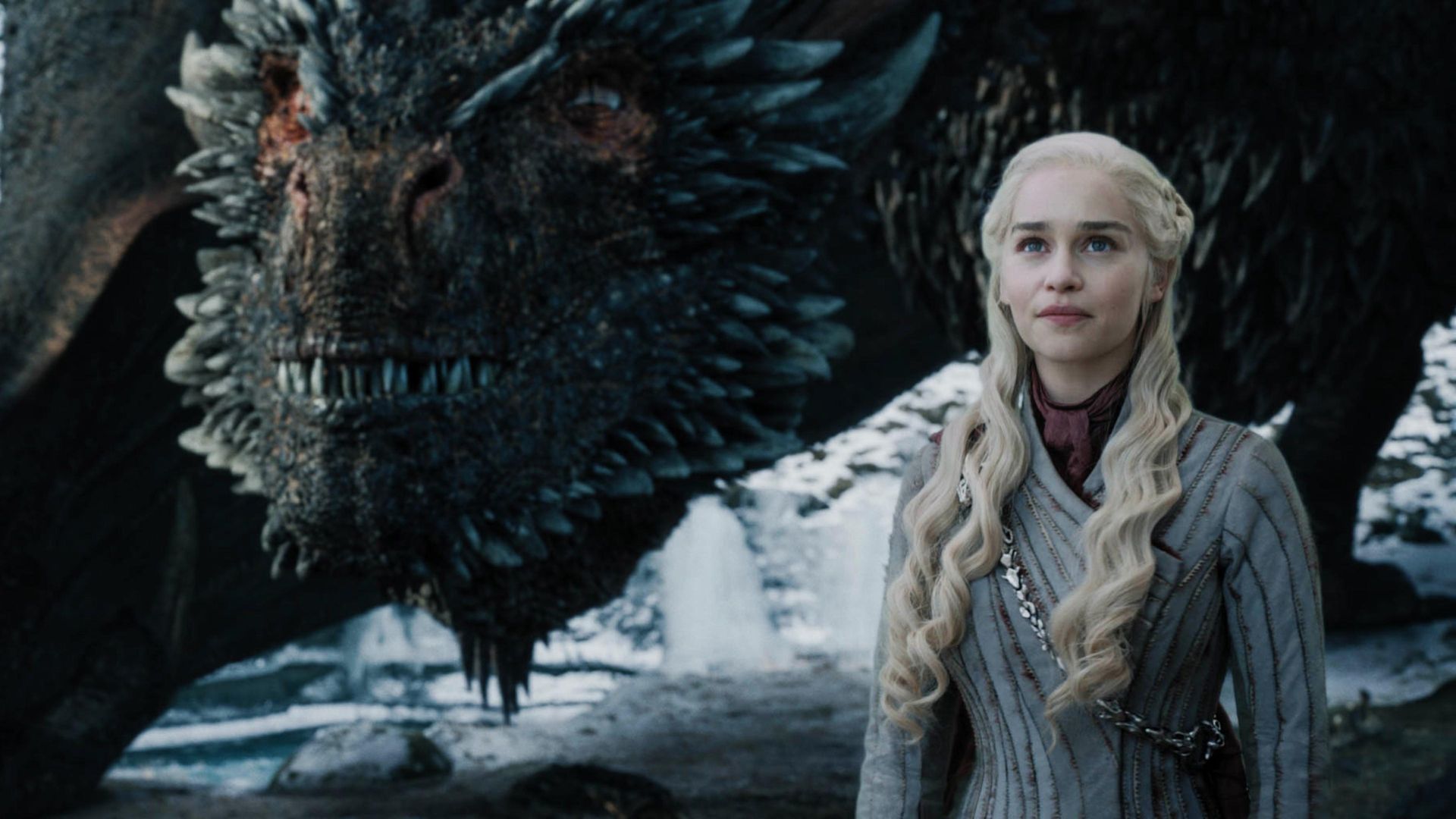
The fantasy television series Game of Thrones exists as an adaptation of George R.R. Martin’s book series A Song of Ice and Fire. The plot follows noble families who inhabit the imaginary realm of Westeros as they vie for control of the Iron Throne which serves as the central authority for the Seven Kingdoms. The story includes political intrigue combined with battle scenes and family loyalty conflicts and the appearance of supernatural threats which include White Walkers who are ice zombies and dragons that breathe fire.
The story takes place in a medieval-style world that extends its story across multiple generations and different continents, from the northernmost regions to the eastern territories of Essos. The main characters in Game of Thrones make ethical decisions while their relationships with others change because old predictions determine the story’s progression. The series investigates how people use power and maintain their honor while trying to survive through unending battles.
Game of Thrones first premiered on HBO from April 2011 until May 2019 for a total of eight seasons which included 73 episodes. The show can be streamed on Max by viewers who subscribe to the service which costs $10.99 each month. The episodes are available for purchase on both Prime Video and Apple TV platforms.
Game of Thrones timeline explained
The dawn age (12,000 BC – 10,000 BC)

The Dawn Age marks the earliest recorded period in Westeros history. The original inhabitants of the land were the Children of the Forest who were small humanoid beings that possessed magical powers which they used to interact with nature. They worshiped weirwood trees as sacred sites and lived in harmony with the land. The First Men crossed from Essos through the land bridge known as the Arm of Dorne about 12000 years before Aegon’s Conquest.
The humans who arrived brought bronze weapons and horses which they used to expand their territory into forested areas. The First Men destroyed weirwoods to establish their settlements which resulted in conflicts that lasted for centuries. The Children used their magic abilities to flood the Arm of Dorne which resulted in the formation of islands and swamps. The Children developed White Walkers when they inserted dragonglass into their First Man captive who transformed into an ice creature that could control dead bodies as soldiers.
The White Walkers developed a rebellion against the people who created them. The Pact which ended all wars between the two groups signed at the Isle of Faces in 10,000 BC. The First Men adopted the Children’s Old Gods religion and agreed to leave the weirwoods untouched. This era established the basis that enabled human settlement in Westeros.
The age of heroes and the long night (10,000 BC – 6,000 BC)
The Age of Heroes started after the Pact, which marked a period of legendary heroes and essential historical events. The first heroes of this era were Bran the Builder and Lann the Clever, who established House Stark and House Lannister respectively. The established families and permanent buildings of the future originated from their founding activities. The Long Night began in 8000 BC when a winter extended over an entire generation, which brought complete darkness and severe winter conditions.
The White Walkers invaded during this time from their northern territory, bringing their undead armies to kill and raise human troops from the dead. The First Men and Children of the Forest allied in the War for the Dawn to repel them. Azor Ahai, a mythical hero, forged a sword called Lightbringer to defeat the White Walkers. The invaders were pushed back beyond the newly constructed Wall, a 700-foot ice barrier built by Bran the Builder with magical wards.
The Night’s Watch was established to protect the Wall from upcoming dangers. This period saw various kingdoms emerge, including the Kingdom of the North which the Starks established. The Long Night’s horrors became folklore, warning of eternal winter’s return.
The Andal invasion and the rise of kingdoms (6,000 BC – 1 BC)

The Andal Invasion began in 6,000 BC when the Andals, an Essos warrior people from Andalos, moved to Westeros. The followers of the Faith of the Seven arrived with iron weapons to begin their conquest of the territories that lay beyond the Neck. Their battles against the First Men lasted for centuries until they nearly exterminated the Children of the Forest who used their magic to oppose Andal religious beliefs. The Andals used seven-pointed stars as religious symbols, which they carved into their skin.
They succeeded in conquering six kingdoms but the North remained unconquered because House Stark protected their territory with First Men customs and the Old Gods. The southern society accepted the Andals as their new citizens by 4,000 BC after the invasion finished its final stages. The period established independent kingdoms through the creation of the Vale and the Riverlands, the Westerlands, the Reach, the Stormlands, and the Dorne territories.
Valyrian Freehold established its power in Essos during 5,000 BC through its control of dragon riders. The Doom of Valyria destroyed the empire through volcanic eruptions that occurred around 100 BC, leaving House Targaryen as the only survivors who remained on Dragonstone with their last dragons. The events created religious and cultural divisions that defined the Westeros area.
Aegon’s conquest and the Targaryen dynasty (1 AC – 281 AC)
Aegon Targaryen and his sisters, Visenya and Rhaenys began the War of Conquest in 2 BC by using three dragons. They defeated House Hoare at Harrenhal and burned House Gardener in the Field of Fire. The Lannisters gave up their fight after they suffered their first defeat. The Starks chose to kneel because it safeguarded their territory in the North. Aegon built King’s Landing and created the Iron Throne by melting down the swords of his enemies.
Dorne maintained its independence through guerrilla tactics, which they used to fight against their oppressors. The year 1 AC (After Conquest) began at this point. The Targaryen Dynasty ruled for nearly 300 years. The Dance of the Dragons civil war between Rhaenyra and Aegon II’s factions, which took place from 129 to 131 AC, resulted in the death of most dragons. Aerys II, known as the Mad King, ruled from 262 AC onwards because he suffered from extreme paranoia and executed people with wildfire.
Aerys rejected alliances from 259 to 280 AC while arranging Rhaegar’s marriage to Elia Martell. The Great Tourney at Harrenhal in 281 AC saw Rhaegar crown Lyanna Stark queen of love and beauty, sparking tensions. The period established a single throne that ruled over all of Westeros, but this development created conditions for future revolts.
Game of Thrones: Robert’s rebellion (281 AC – 283 AC)

Robert’s Rebellion began in 281 AC after Rhaegar Targaryen abducted Lyanna Stark, who was engaged to Robert Baratheon. Aerys II executed Lyanna’s brother Brandon and her father Rickard, who sought justice in King’s Landing. The Targaryen rule faced rebellion from the houses Stark, Baratheon, Arryn, and Tully. The battles reached their peak at the Battle of the Trident, where Robert killed Rhaegar. Tywin Lannister sacked King’s Landing, betraying Aerys.
Jaime Lannister killed the Mad King to stop the royal palace from burning the city down with wildfire. Robert took the throne through marriage to Cersei Lannister, which he used to create a political alliance. Daenerys Targaryen was born on Dragonstone during a storm, earning her “Stormborn” title. The surviving Targaryens, Viserys and Daenerys, escaped to Essos. Ned Stark discovered Lyanna dying after childbirth and took her son Jon Snow who was secretly Rhaegar’s, to raise as his illegitimate son.
The rebellion ended Targaryen rule, which resulted in the beginning of the Baratheon kingship. The event continued for two years while it changed political alliances and left Jon’s parentage as an unanswered question.
Game of Thrones: The war of the five kings (298 AC – 300 AC)

The 298 AC death of King Robert Baratheon happened during a Cersei Lannister-planned hunting mishap. As Hand, Ned Stark found Joffrey Baratheon to be Jaime Lannister’s son instead of Robert’s legitimate offspring. Joffrey executed Ned which started the War of the Five Kings. The claimants to the throne included Joffrey, Renly Baratheon, Stannis Baratheon, Robb Stark (King in the North), and Balon Greyjoy.
Renly was killed by a shadow that Melisandre had sent during the 299 AC theatrical performance. Stannis suffered defeat at the Battle of Blackwater when Lannisters and Tyrells joined forces against him. Daenerys Targaryen became Khaleesi in Essos after she commanded dragons and assembled a military force. Jon Snow enlisted in the Night’s Watch. The Red Wedding occurred in 300 AC when Walder Frey and Roose Bolton killed Robb and his wife, Talisa and his mother, Catelyn.
Bran Stark traveled northward while Arya underwent training and Sansa learned to control political situations. The White Walkers developed into an escalating danger to society. Daenerys liberated enslaved people in Astapor and Yunkai. The historical time period saw civil war break out while supernatural threats began to escalate.
The rise of threats and alliances in Game of Thrones (301 AC – 303 AC)

Joffrey died at his Purple Wedding through a poisoning executed by Olenna Tyrell and Petyr Baelish. The trial against Tyrion Lannister resulted in an unjust conviction. Baelish and Sansa escaped Lysa Arryn’s murder. Daenerys controlled Meereen through her dragons’ chains. Arya reached Braavos for her training in 302 AC while Bran attained the Three-Eyed Raven. Tommen Baratheon married Margaery Tyrell; Sansa wed Ramsay Bolton.
Stannis lost the battle after sacrificing his daughter for combat. Cersei faced religious trials from the Faith Militant. The White Walkers demonstrated their strength when they assaulted Hardhome. The mutineers stabbed Jon Snow. Jon Snow returned to life through Melisandre’s revival in 303 AC. Tyrion provided Daenerys with counsel while she established herself in Essos.
Cersei used wildfire to destroy the Sept of Baelor, which resulted in her enemies’ deaths and Tommen’s suicide. Bran attained his status as the Three-Eyed Raven. Sansa defeated Ramsay at the Battle of the Bastards. Daenerys sailed west with her fleet, which included dragons and allies like Tyrion and Varys. The Starks came together again at Winterfell.
Game of Thrones: The great war and the finale (304 AC – 305 AC)

In 304 AC, Daenerys met Jon Snow at Dragonstone; they allied against the White Walkers. The Starks executed Littlefinger because he committed treason. Jon and his partners captured a wight to show Cersei the existing danger. The Night King reanimated a dragon after its death. Daenerys and Jon developed a romantic relationship after his true identity as Aegon Targaryen became known.
The Battle of Winterfell began in 305 AC when forces gathered at Winterfell to fight against the Army of the Dead. Arya killed the Night King, which resulted in the White Walkers being defeated. The Starks and Tyrion survived, but many others died. Daenerys attacked King’s Landing, which she destroyed with dragonfire after the city surrendered. Jon killed Daenerys to end her rule of oppression. A council elected Bran Stark to become king. Sansa became Queen in the North, Arya explored the west, and Jon returned to the Night’s Watch. The series Game of Thrones ended with Bran reorganizing Westeros.
Stay tuned for more news and updates.
Also Read: A Knight of the Seven Kingdoms Explained: How the series connects to Game of Thrones
Follow us on Instagram and Twitter.

Hilfa, Senior Writer at Hilvaro, excels in pop culture journalism. She crafts engaging content on movies, TV, & trends, fueled by her love for storytelling & entertainment.
Discover more from Hilvaro
Subscribe to get the latest posts sent to your email.



2 thoughts on “Game of Thrones Timeline Explained: A Complete History From Ancient Westeros to the Finale”