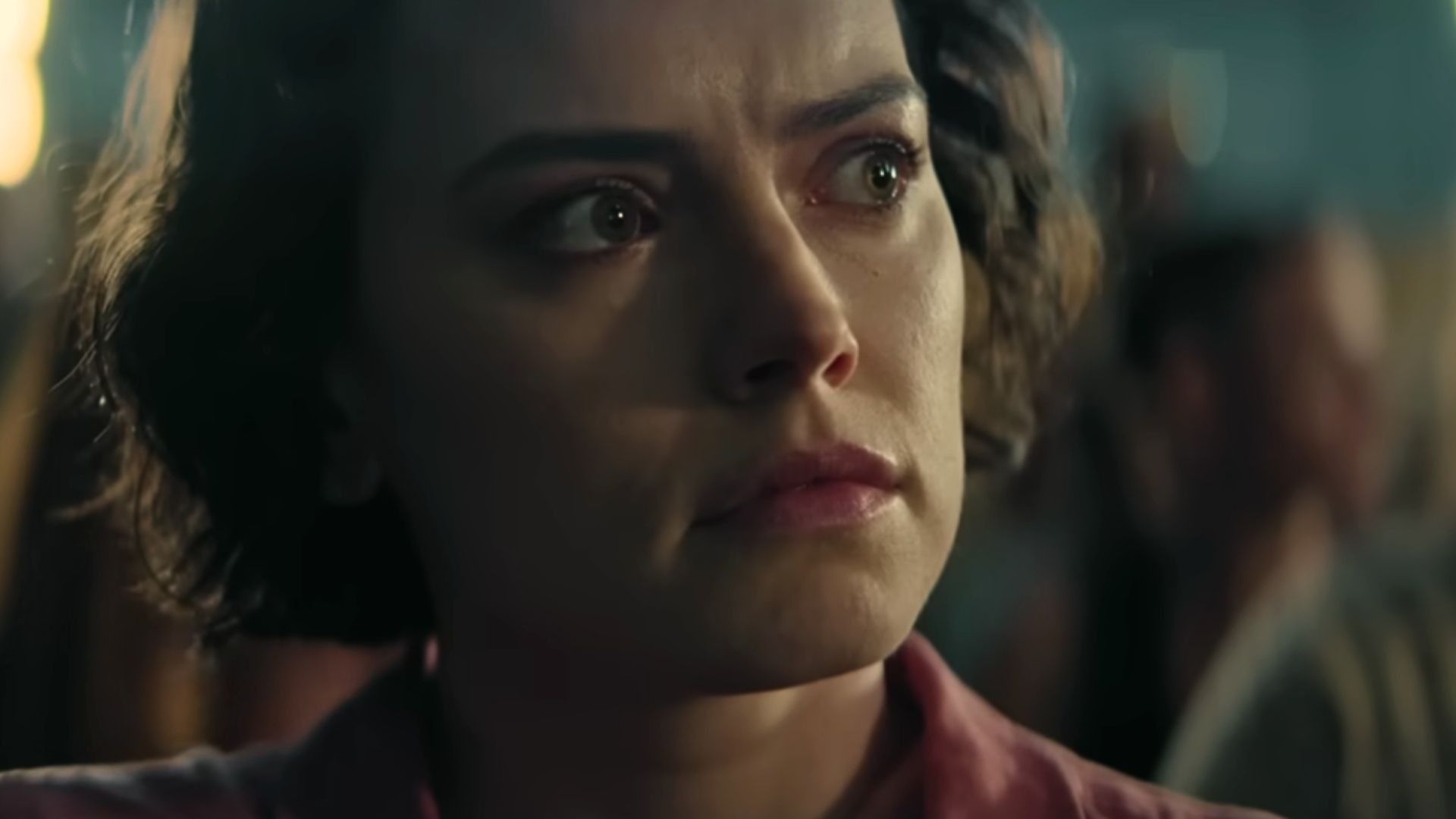
In the isolated surroundings of Tasmania, Australia, We Bury the Dead unfolds as a survival thriller. Directed by Zak Hilditch and starring Daisy Ridley, who plays the character of Ava Newman. She is an American woman whose world turns upside down when a military project conducted by the U.S. military fails, and a weapon results in the death of nearly everyone on the island. As a result, when her husband fails to return home because he was on a business retreat on the island, she joins a government body recovery unit.
A somber task turns chilling as the corpses show signs of reanimation, blurring the line between death and something eerily alive. With Brenton Thwaites as her companion, Clay, a fellow retriever, the story explores isolation, loss, and the human drive to hold on. Running 94 minutes and rated R for violence, the movie premiered at SXSW in 2025 and delivers a grounded take on the zombie genre, focusing less on gore and more on emotional weight.
As of January 5, 2026, We Bury the Dead is playing in theaters across the U.S. through Vertical Entertainment. In the UK, it is available for digital rental, while in Australia, it is set for release on February 5.
We Bury the Dead: The catastrophe and Its Immediate fallout
The first event of the story is catastrophic in nature; a new U.S. defense weapon goes haywire and explodes near the island of Tasmania, wiping out its entire population in a split second. The explosion results in barren land dotted with corpses from cities to beaches, thus making the island, renowned for its natural charm, a graveyard.
Australian forces quickly establish quarantines and retrieval operations to manage the dead, prioritizing efficiency over sentiment. No official death toll is announced, but the scale implies total loss, with international aid limited due to contamination fears. Ava arrives from the mainland, driven by reports of her husband’s last known location at a coastal resort.
She signs on with the retrieval unit, equipped with basic tools like body bags and protective gear, to scan zones methodically. Early scenes show teams working in eerie quiet, cataloging remains under gray skies, highlighting the bureaucratic response to unimaginable tragedy. This phase establishes the film’s tone: methodical yet fragile, as small anomalies, like twitching limbs, hint at disruptions ahead. The disaster’s cause remains tied to military error, underscoring human fallibility in global conflicts. Through Ava’s eyes, viewers see the shift from shock to routine, as retrievers process hundreds daily without pause.
Ava’s journey south in We Bury the Dead and companions

Ava’s path intensifies as she pairs with Clay, a local retriever played by Brenton Thwaites, who brings a grounded, survivalist edge to their duo. Together, they navigate checkpoints and restricted areas, driving rugged vehicles across scarred terrain toward the southeast resort. Clay, more pragmatic than Ava, shares stories of pre-disaster life, revealing his own losses and adding layers to their growing bond. Their route passes abandoned homes and wildlife carcasses, with radio updates from command stressing protocol: tag, bag, and transport for burial.
Ava clings to personal details, a photo of her husband, and notes from his emails, fueling her resolve amid exhaustion. Tensions rise at military outposts, where officers enforce strict rules, viewing retrievers as essential but expendable. Along the way, they encounter scattered survivors’ signals, false hopes that test Ava’s optimism. Clay’s humor lightens moments, like scavenging for supplies, but underscores isolation: no family contacts, just the hum of engines and distant echoes. This section builds their partnership as a quiet anchor, showing how shared purpose emerges in crisis, without overt drama.
The rise of the reanimated and rising threats

As retrievals continue, subtle changes emerge: some bodies stir, emitting low groans or grinding teeth, signaling reanimation. Military protocol deems them brain-dead, ordering immediate elimination to prevent spread, but Ava notices patterns, like averted eyes or huddled postures, that suggest awareness.
These “walkers” start slow, shuffling passively, but grow bolder, pursuing with relentless steps and bites that risk infection. Ava and Clay face early encounters during night shifts, using improvised weapons like axes for defense, heightening the peril of open fields. Command broadcasts warn of escalating violence, linking it to the time post-revival, with no cure identified.
The film We Bury the Dead portrays these beings not just as monsters but as echoes of the lost, with details like familiar clothing evoking grief. Ava’s observations challenge orders, leading to hushed debates with Clay about mercy versus safety. Sound design amplifies threats, teeth gnashing builds dread, while visuals keep encounters grounded, avoiding excess spectacle. This evolution shifts the mission from recovery to evasion, forcing choices that mirror broader uncertainties in the crisis.
The Finale of We Bury the Dead: confronting loss and closure

Nearing the resort, Ava discovers her husband among the reanimated, his form altered but recognizable, forcing a pivotal reckoning. The encounter unfolds in a derelict building, where initial relief gives way to the reality of his vacant state, grinding teeth and aimless movements confirming the military’s stance. Clay urges retreat as more walkers converge, but Ava lingers, searching for signs of the man she loved, tying back to her unhealed wounds.
The climax of We Bury the Dead avoids grand battles, focusing on her internal struggle: to end his undeath mercifully or hold onto illusion. Ultimately, she chooses release, a quiet act that symbolizes acceptance, though hints of persistent threat linger, echoing questions of coexistence from similar tales. Clay’s support solidifies their makeshift family, offering faint hope amid ruin. The resolution grounds in grief’s process, no easy fixes, just forward steps, leaving Tasmania’s fate open as quarantines hold. This understated close reinforces the film’s core: revival as a metaphor for denial, resolved through letting go.
Watch We Bury the Dead available in theaters in the U.S.
Also Read: The Paradise Murder on Lifetime: Ending Explained
Bring Her Back Ending Explained: Does Piper Survive the Ritual?
Follow us on Instagram and Twitter.

Hilfa, Senior Writer at Hilvaro, excels in pop culture journalism. She crafts engaging content on movies, TV, & trends, fueled by her love for storytelling & entertainment.
Discover more from Hilvaro
Subscribe to get the latest posts sent to your email.