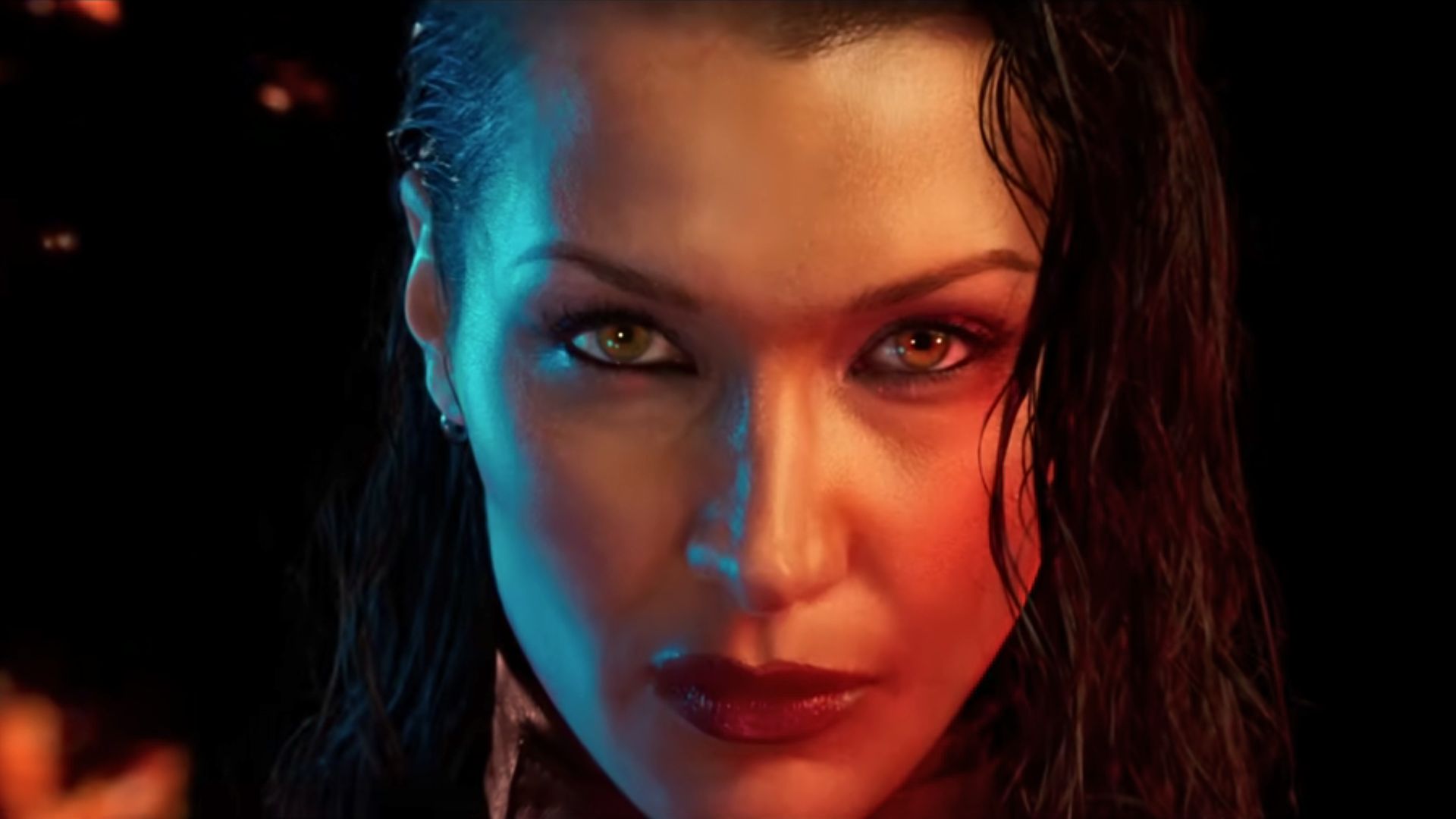
The FX series The Beauty, developed by Ryan Murphy and Matt Hodgson, kicks off with a frenetic scene at a Paris fashion show. Ruby, a model played by Bella Hadid, is seen dazed and covered in sweat before going on a violent spree, breaking necks and frantically drinking water, only to spontaneously combust into a mass of red meat and bones. This is the beginning of a horror thriller series based on the comic book series by Jeremy Haun and Jason A. Hurley, in which FBI agents Cooper Madsen (Evan Peters) and Jordan Bennett (Rebecca Hall) are tasked with solving the murders of supermodels around the globe.
They soon discover a s*xually transmitted virus that causes its carriers to become their most physically beautiful selves, men with chiseled jawlines and muscles, women young and slender but with a horrific price tag that results in mutations and spontaneous combustion. The series delves into the tech billionaire’s plan to capitalize on this “miracle drug,” paralleling it with the current beauty fixation on Ozempic.
Initial audience responses point out the series’s ability to make viewers cringe through its graphic body horror and punishing take on vanity, but most agree that this is done for a reason: to comment on the societal norms surrounding beauty and perfection. It has been described as a “hot mess” or “grotesque” yet interesting series, with audience gasps during screenings emphasizing its deliberate shock value. The series premiered on January 21, 2026, consisting of 11 episodes.
The Beauty: Body horror and grotesque transformations

The core of The Beauty’s discomfort lies in its vivid body horror scenes, where characters undergo painful changes after infection. The virus spreads like an STD, reshaping bodies from the inside out, causing bones to crunch and skeletons to contort in agonizing ways. Transformations often involve writhing on floors, hatching from gooey cocoons, or shedding skin like suits, leaving behind ooze and fuming flesh. In one early episode, a character rips off flesh, peels fingernails, and removes teeth, leading to spontaneous combustion after about two years of “perfection.”
These moments are shown in detail, with blood, guts, vomit, and other fluids splashing across the screen, making viewers look away. The effects team uses prosthetics and contortionists to heighten the realism, as actress Rebecca Hall noted about her character’s shift, where a new performer takes over post-transformation. The early audience has been highly responsive to these aspects. During a movie screening, one viewer shouted, “Ah, that’s so disgusting!” during a cocooning scene, while others gasped at the sound of bone-breaking.
On social media platforms, viewers labeled the series “insane in the best way” but confessed that the level of gore was stomach-churning, with some comparing it to movies such as “The Substance.” Reviewers highlight that this horror is intentional, with characters being punished for their vanity and reflecting actual fears of body-changing drugs. By Episode 8, the “beauty births” become overwhelming, but they also make the storylines novel through mutations.
Satire on beauty standards and societal pressures

The Beauty employs satire in pointing out the importance of looks in society, making the audience uncomfortable with the ugly side of perfection-seeking. The virus causes people to transform into perfect forms, slim, young, and beautiful, but ends in nightmarish ways, criticizing the quick fix of GLP-1 medications like Ozempic and Mounjaro. The inclusion of incels, Chads, and celebrity culture indicates how beauty is a divider, with characters like an emotionally immature incel seeking a makeover to connect with others.
The series also penalizes the self-absorbed, like a pop star who is hurled from a skyscraper or models exploding, emphasizing the anger towards those who resort to enhancement. Viewers and critics recognize this as intentional. One review calls it a commentary on the Ozempic age, where drugs are seen as “one shot makes you hot,” but the series shows the gruesome price. Fans on social media say it’s “hooked” them despite the mess, noting it feels like early “American Horror Story” seasons with purpose. However, some find the satire clumsy, like watching slim actors in fat suits, which adds to the unease but questions the show’s own beauty standards.
Episodes focusing on ordinary people, like a teenage girl blinded by insecurities, evoke sadness amid the chaos, making the critique more relatable. Overall, the discomfort prompts reflection on what people risk for looks, as actor Ashton Kutcher explained, emphasizing imperfection’s beauty.
Viewer and critic reactions to the intentional discomfort
Early reactions to The Beauty emphasize how its discomfort is crafted to provoke, with many praising or criticizing the approach. Viewers describe the show as “wildest of the year,” hooked after the first episode despite the gore, calling it a “s*xy, bloody mess, in a good way.” In screenings, audiences gasped at transformations, with one person noting it was “more than my stomach could handle.” Online, some say it’s “insane” and comparable to “The Substance,” but the purposeful shocks make it engaging.
Critics agree the unease is deliberate, with one calling it “the point” to poke at culture where drugs like Ozempic are normalized. However, responses vary. Some label it “offensive, dumbed down, and unhinged,” panning the excessive s*x and violence as unoriginal. Others find it a “frenzied ride” that’s fun until the story splinters, causing whiplash. The STD metaphor and incel storylines unsettle, with leering contempt for characters adding layers.
Positive takes highlight the gore as “gory good-enough time,” though not smart, keeping viewers occupied. Actress Rebecca Hall enjoyed the twist, seeing it as exciting for audiences. Ultimately, reactions show the discomfort succeeds in sparking discussion, even if the execution divides opinions.
Stay tuned for what’s coming next!
Also Read: Kendall Jenner Opens Up About the Speculation She’s Faced for Years
Follow us on Instagram and Twitter.

Hilfa, Senior Writer at Hilvaro, excels in pop culture journalism. She crafts engaging content on movies, TV, & trends, fueled by her love for storytelling & entertainment.
Discover more from Hilvaro
Subscribe to get the latest posts sent to your email.

One thought on “Why The Beauty feels uncomfortable on purpose, according to early viewer reactions”